

Blogs
Beijing IP Court Releases 2024 Annual Cases
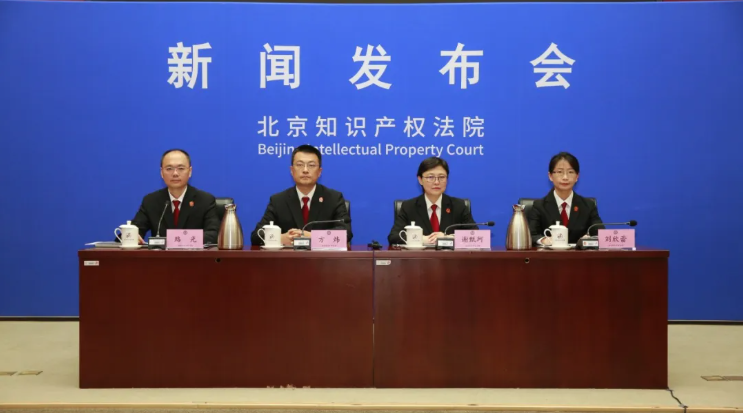
On April 30, 2025, the Beijing IP Court (BIPC) released their list of 2024 annual cases including 7 IP-related cases and 1 antitrust case. The Court explained that the cases “cover the four major intellectual property trial areas of patents, trademarks, copyrights, and competition and monopoly, involving innovative achievements in emerging industries in key areas such as medicine, communications, seed industry, platform economy and data. These cases reflect five major characteristics: increasing efforts to protect industrial innovation in key areas, cracking down on intellectual property infringements, helping to build a high-level socialist market economic system, serving the development of the intellectual property rule of law, and contributing Chinese wisdom to world intellectual property governance.”
The original text is available here via social media as the BIPC seems to be geoblocked as of the time of writing.
As summarized by the BIPC:
Case Ⅰ: Standard-Essential Patent Infringement and Royalty Rate Dispute
——Assisting a Renowned Enterprise in the Communications Field to Reach a Global Settlement
1. Case Information
Plaintiff: X Company
Defendant: X Guangdong Mobile Communications Company.
2. Basic Facts
Both parties to this case are renowned enterprises in the field of communications. At the time of this trial, the two parties had been engaged in licensing negotiations for many years over the 3G and 4G standard – essential patent portfolios, and there were numerous related parallel litigations in various jurisdictions globally, including infringement claims and tariff claims. The plaintiff is the holder of the invention patent titled ‘Base Station Device, Mobile Station Device and Communication Method’. It claims that the patent involved is a standard – essential patent of the LTE communication standard, and believes that the defendant’s acts of manufacturing, selling and offering for sale the two models of mobile phones involved constitute an infringement of the patent right involved, and requests the court to order the defendant to stop the infringing acts.
The plaintiff did not file a claim for damages and stated that the purpose of its lawsuit was to advance the licensing negotiations. The defendant filed a counterclaim in the dispute over the royalties of the standard essential patents in this case, requesting the court to make a judgment on the licensing conditions, including but not limited to the licensing royalties, within the scope of mainland China for the 3G and 4G standard essential patents which the plaintiff owns and has the right to license for the intelligent terminal products manufactured and sold by the defendant. After trial, the Beijing Intellectual Property Court held that the counterclaim filed by the defendant met the acceptance conditions, thereby accepted the defendant’s counterclaim and actively promoted the joint trial of the two lawsuits, and finally facilitated the two parties to successfully reach a global patent cross – licensing agreement. On the same day, the parties applied for the withdrawal of this case and the counterclaim respectively on the grounds of reaching a settlement, and the Beijing Intellectual Property Court ruled to approve the withdrawal of the lawsuit by both parties.
3. Judgment Gist
When a standard-essential patent holder files a patent infringement lawsuit, requesting the court to order the implementer to stop infringing the patent involved, and the implementer files a counterclaim, requesting the court to rule on the licensing conditions of the standard – essential patent portfolio including the patent involved, the court may take into account the fact that both the counterclaim and the original claim need to examine the same fact, that is, the licensing negotiation matters between the patent holder and the implementer regarding the patent involved and the related standard – essential patent portfolio.
The counterclaim should be accepted and jointly tried, in a situation where there is a high degree of correlation between the counterclaim and the original claim.
4.Typical Significance
Under civil procedure law theory, the relationship between the counterclaim and the original claim serves as the basis for their joint trial. The closer the substantive legal relationship between the original claim and the counterclaim, the more necessary it is to jointly try them in the same case. Article 233 of the “Interpretation of the Supreme People’s Court Concerning the Application of the Civil Procedure Law of the People’s Republic of China (Amended in 2022)” (referred to as the Judicial Interpretation Concerning the Civil Procedure Law) stipulates the acceptance conditions for counterclaims, stating that if the counterclaim and the original claim are based on the same legal relationship, there is a causal relationship between the claims, or the counterclaim and the original claim are based on the same fact, the people’s court should jointly try them. Generally, the counterclaims and original claims accepted by the people’s court are based on the same legal relationship or the same fact, but there are certain particularities in the field of standard – essential patents.
A patent that must be used to implement a certain technical standard is called a standard-essential patent. With the vigorous development of the digital economy, standard-essential patent technologies are widely applied in fields such as mobile communication, intelligent connected vehicles, and the Internet of Things. A smart terminal product often contains thousands of standard – essential patents. Against the backdrop of intensified market competition and accelerated technological iteration, licensing negotiations and disputes surrounding standard-essential patents are increasing day by day. In a standard-essential patent infringement case, the right basis usually only involves one or several patents, and the alleged infringing product is also specific. However, in actual licensing negotiations, the two parties often conduct negotiations concerning the entire standard – essential patent portfolio of the patent holder and all related products of the implementer. This leads to a situation where a standard – essential patent infringement lawsuit and a royalty rate lawsuit are not consistent in the scope of patents and products involved. So, on the surface, it does not meet the general acceptance conditions for counterclaims in the civil procedure law. This is exactly the case in this lawsuit. Based on this, the Company claimed that the counterclaim filed by the Mobile Communications Company should not be accepted, and further claimed that the original claim and the counterclaim did not involve the same fact because it did not request the calculation and payment of infringement damages based on the licensing fees in this case.
In response to this claim, the court referred to the previous judicial practice of standard – essential patent trials, comprehensively considered the trial ideas and judgment logic of standard – essential patent infringement lawsuits and royalty rate lawsuits, and held that in an infringement lawsuit involving standard-essential patents, whether to order the defendant to stop the infringement is not only determined by whether the defendant has implemented the patent involved without permission, but also by whether the negotiating parties have violated the FRAND obligation. To determine whether the patent holder has violated the FRAND licensing obligation and whether the implementer has violated the obligation of good faith negotiation, in addition to examining the negotiating behaviors of both parties, it is also necessary to examine whether the licensing conditions proposed by both parties during the negotiation process are obviously unreasonable. These licensing conditions are not only for the patent involved, but for all 3G and 4G standard-essential patents for which the X Company has the right to grant licenses. To determine whether the licensing conditions proposed by both parties are obviously unreasonable, it is necessary to determine the reasonable range of licensing conditions, and the trial content of the royalty rate lawsuit for standard-essential patents is exactly the licensing conditions.
Based on this special trial logic, although the counterclaim and the original claim in this case are not based on the same legal relationship, there is a causal connection between them, and both are closely related to the fact of the licensing negotiation between the two parties. On this basis, the Beijing Intellectual Property Court held that the the counterclaim should be accepted and jointly tried.
The acceptance of the counterclaim aligns with the interests of the parties, which was mutually acknowledged by both sides. The essence of standard -essential patent disputes is to promote negotiation consensus through litigation confrontation, and seek negotiation benefits through litigation procedures. In this case, on the one hand, the patent holder has already initiated an infringement lawsuit and sought injunctive relief in advance, on the other hand, the patent implementer hopes that the court will rule on the licensing conditions. If the counterclaim of the patent implementer is not accepted, it can only initiate another subsequent lawsuit, and a new lawsuit may still need to go through complex and time-consuming procedures such as service of process in foreign-related cases and objections to jurisdiction. This is not only inefficient, but also the sequence and speed of the two lawsuits may affect the negotiating positions of the two parties. Facts have proved that the joint trial of the two lawsuits promoted the two parties to successfully reach a global cross-licensing agreement and subsequent cooperation plan, which resolved the long-standing patent disputes between the two parties and achieved a win-win cooperation between the two parties.
This case not only delves deep into the application of the law and clarifies the conditions for the joint trial of a standard-essential patent infringement lawsuit and a counterclaim for standard-essential patent royalties, but also adheres to the judicial concept of “promoting negotiation through trial and substantially resolving disputes”, promoting the substantial resolution of disputes, maximizing the interests of both parties, and promoting industrial licensing. The fair and efficient trial of this case demonstrates the high level and professionalism of China’s judicial protection of intellectual property rights, and reflects the wisdom and responsibility of Chinese courts in the new era in resolving international disputes, as a useful reference for the trial of similar cases in the future.
Case Ⅱ: Administrative Litigation Case Regarding the Invalidation of the Patent Right for “A Crystalline Form of Rocuronium Bromide”
—— Assessing the Inventiveness of a Pharmaceutical crystalline form Patent Based on Technical Effects
1. Case Information
Plaintiff: Chengdu Xin X pharmaceutical company
Defendant: National Intellectual Property Administration
Third Party: Wang XX
2. Basic Facts
The plaintiff is the patentee of an invention patent titled “A Crystalline Form of Rocuronium Bromide”. The third party filed a request with the National Intellectual Property Administration to declare the patent invalid. The National Intellectual Property Administration issued a decision under appeal declaring the entire patent invalid. Then the patentee filed an administrative lawsuit with the Beijing Intellectual Property Court, claiming that this patent achieved unexpected technical effects and had been commercialized and marketed with actual industrial value, and that the Claim 1 of this patent is inventive and the decision under appeal is incorrect. After the trial, the Beijing Intellectual Property Court held that crystalline form A of rocuronium bromide in this patent had better technical effects compared to the rocuronium bromide solid disclosed in the prior art, and that this patent is inventive and the decision under appeal was incorrect in this regard. Accordingly the court ruled to revoke the decision under appeal and ordered the National Intellectual Property Administration to make a new examination decision. After the judgment was pronounced, none of the parties appealed, and the first-instance judgment of this case has taken effect.
3. Judgment Gist
When assessing the inventiveness of a pharmaceutical crystalline form patent, even if obtaining the crystalline form itself is obvious, it doesn’t necessarily mean it lacks inventiveness. It’s still necessary to consider its technical effects compared to the prior art. If the crystalline form achieves better technical effects than the prior art, and these effects are closely related to the formation of the medicine, it can be determined that the crystalline form patent is inventive.
4. Typical Significance
The pharmaceutical and healthcare industry is not only a core component of China’s strategic emerging industries but also an important area related to people’s livelihood and well-being. Its sustainable development has a profound impact on the overall economic and social situation. As a typical technology – intensive industry, the pharmaceutical field is characterized by high investment in research and development, long cycles, and high risks. Therefore, intellectual property protection plays a prominent role in stimulating technological innovation, improving drug accessibility, and promoting industrial upgrading.
Pharmaceutical patents are the most core intellectual property achievements of pharmaceutical enterprises. Regarding a certain drug, the patents obtained by pharmaceutical enterprises for different technical solutions form a complete patent system, including the effective active compound as well as the corresponding crystalline form and the composition. This system is like a “firewall” or a “moat”, and it effectively ensures that pharmaceutical enterprises can fully realize the commercial interests of the drug during the patent exclusivity period, enhancing their market competitiveness. The crystalline form patent in question in this case is a common type of pharmaceutical patent. The crystalline form usually refers to the solid existence form of the drug’s active compound. Due to different crystallization conditions and processes, the active compound of the same drug may yield crystalline forms with different spatial structures and molecular arrangements. This phenomenon of polymorphism in drugs is very important for drug research and development, because different crystalline forms exhibit different physical and chemical properties. This not only affects the preparation, processing, and storage of the drug, but also affects the dissolution and release characteristics of the drug in the human body, thus affecting the efficacy and safety of the drug. On the one hand, the selection of the crystalline form is of great significance for drugs. On the other hand, enterprises have invested a large amount of manpower and financial resources in the research and development of crystalline forms. Therefore, original research pharmaceutical companies usually include the crystalline form, compound, composition, and other inventions in the scope of patent applications together to form a multi-level and all-round pharmaceutical patent protection system.
Generic pharmaceutical companies will also increase their efforts in researching the crystalline forms of known active compounds of drugs, and strive to avoid the crystalline form patents of original research pharmaceutical companies, in order to compete in the market for this drug. It can be seen how important crystalline form patents are for pharmaceutical enterprises and the pharmaceutical industry.
As the exclusive jurisdiction court for administrative cases regarding patent authorization and confirmation across the country, the Beijing Intellectual Property Court has always attached great importance to the trial of administrative cases of requests for invalidation of patents related to pharmaceutical crystalline forms. By applying the rules of inventiveness judgement correctly, the judgment of this case clarifies the factors to be considered for the technical effects of pharmaceutical crystalline form patents, providing a reference and guidance for the decision of such cases.
In this case, it is fully recognized by the court that the prior art has a strong demand as well as provide inspiration on forming crystalline forms of known active compounds and changing known crystalline forms. Compared with the process of creating a compound from scratch, the development of crystalline forms usually results from multiple attempts to use different crystallization methods for known active compounds. crystalline form inventions usually use the general properties of crystals known to those skilled in the art and conventional crystal preparation methods, which makes it extremely difficult for the technical means of such patents themselves to meet the requirement of non-obviousness in the inventiveness judgment. If the exclusive protection of an invention patent is granted merely because there are technical effects predictable by those skilled in the art, it is obviously inconsistent with the contribution made by the inventor to the prior art. There have always been different understandings in practice on how to consider the role played by the technical effects of crystalline forms in the inventiveness judgment. The judgment of this case proposes the rule that to determine whether a crystalline form has achieved technical effects that make it inventive compared with the prior art, it is possible to consider whether the technical effects recorded in the specification are related to the finished medicine.
The technical effects described should be specific rather than general physical and chemical properties, such as purity, melting point, and hygroscopicity. If the recorded technical effects are highly related to the finished medicine and the marketed drug uses this crystalline form, it can be considered that it has beneficial technical effects. Correspondingly, the crystalline form patent is inventive and should be protected by the Patent Law.
This case is a typical example of Beijing Intellectual Property Court’s active implementation of the innovation-driven development strategy based on the judicial practice of the pharmaceutical and healthcare industry. For the inventiveness judgment of drug-related patents, within the framework of the current rules system, it is necessary to comprehensively consider the relationship between marketed drugs and technical effects, fully protecting the interests of patent holders. The specific judicial rules of this case are helpful to promote the continuous innovation and development of the pharmaceutical industry, thus providing judicial support for ensuring the accessibility of medicines for the people and promoting the implementation of the Healthy China Strategy.
Case Ⅲ: Administrative Litigation Case Involving Invalidation of the “Dou Hai Yin” Trademark Right
——Recognizing the Core Service Trademark of XX Internet Platform Enterprise as Well-Known
1. Case Information
Plaintiff: Beijing XX Network Technology Co., Ltd. (hereinafter referred to as “XX Network Company”)
Defendant: National Intellectual Property Administration
Third Party: Shanghai XX Technology Co., Ltd. (hereinafter referred to as “XX Technology Company”)
2. Basic Facts
XX Technology Company applied for registration of the trademark “Dou Hai Yin” on August 31, 2018, which was approved for use in Class 39 services including “travel reservations.” On January 4, 2022, XX Network Company filed an invalidation request on the grounds that the disputed trademark violated Article 13 of the Trademark Law of the People’s Republic of China (prohibition against imitation of well-known trademarks). The National Intellectual Property Administration reviewed the case and determined that the “Dou Yin” trademark claimed by XX Network Company has a short period of use and insufficient evidence to prove it had achieved well-known status. It thus ruled to maintain the disputed trademark. XX Network Company refused to accept the ruling and filed an administrative lawsuit with the Beijing Intellectual Property Court. The court held in its first-instance judgment that although the “Dou Yin” trademark had been used for less than two years before the application date of the disputed trademark, the Dou Yin App had experienced explosive growth with short videos and social platforms as the core business since its launch in September 2016. By June 2018, it had become the top domestic short-video platform with a market penetration rate of 29.8%, reached over 500 million monthly active users (MAU) by July 2018, and accumulated over 3.1 billion total downloads by September 2018. In this case, XX Technology Company used promotional slogans such as “Check-in with Dou Yin,” demonstrating obviously malicious intent to free-ride on XX Network Company’s goodwill. So the “Dou Hai Yin” trademark should be deemed an imitation of “Dou Yin,” violating paragraph 3 of Article 13 of the Trademark Law. The Beijing Intellectual Property Court revoked the administrative ruling. The National Intellectual Property Administration filed an appeal against the decision, and the Beijing High People’s Court issued a final judgment rejecting the appeal and upholding the original judgment.
3. Judgment Gist
When determining whether a trademark in the internet sector has achieved well-known status, courts must fully consider the internet industry’s unique characteristics and comprehensively assess factors such as the actual use effects of the trademark, market coverage, user growth rate, and other multidimensional criteria to evaluate whether the trademark meets the standard of being “widely recognized by the relevant public.”
4. Typical Significance
The platform economy has emerged as a pivotal engine driving the digital transformation of the real economy and unleashing new-quality productive forces. Platform enterprises rapidly accumulate market reputation through technological innovation and business model updates, with their highly influential brand value in particular becoming a core competitiveness driving innovative development. As the trademark of these enterprises hold enormous commercial value, the more well-known a trademark becomes, the more likely it is to be targeted for malicious registration or free-riding.
In China’s trademark registration system, protection for registered trademarks is confined to identical or similar goods/services. To combat cross-class malicious registrations, rights holders must prove their trademark has achieved “ wide recognition by the relevant public” to obtain cross-class protection for a well-known trademark. A well-known trademark, as the highest embodiment of corporate goodwill, represents consumers’ utmost trust in product quality and service standards—it is not merely an honorary title. In judicial practice, courts apply the principles of “ case-by-case determination” “passive protection” and “ protection as needed” to dynamically examine well-known trademark recognition. This approach balances precise strikes against cross-class bad-faith registrations with avoiding over-expansion of protection that could stifle market innovation. This case establishes adjudication rules for the recognition and protection of well-known trademarks in the internet sector:
First, Significantly Shortening the Traditional Time-in-Use Requirement for Well-Known Status. Under the Provisions on the Recognition and Protection of Well-Known Trademarks issued by the former State Administration for Industry and Commerce, evidence proving a registered trademark’s well-known status must demonstrate at least three years of registration or five years of continuous use. In this case, the National Intellectual Property Administration initially denied recognition primarily because the “Dou Yin” trademark had been in use for a short period before the disputed trademark’s application. The judgment of this case which is based on the trademark law and judicial interpretations pointed out that with the innovative advantages of short video content distribution and algorithmic recommendation mechanism, Dou Yin APP has shown exponential growth in users and downloads in a short period of time, and rapidly accumulated a wide user base and market influence, and the cycle of its trademark popularity formation has been significantly shortened. If the traditional length-of-use requirement of the recognition standard is applied mechanically, it will be inconsistent with the development law of the Internet industry and the actual influence of the trademark.
Second, Deepening Analysis of Well-Known Status Recognition in the Traffic Era. With the popularization of the Internet, short videos, artificial intelligence and other technologies, it has become a common business model for merchants to obtain economic benefits by attracting public attention. This case combines the characteristics of the “attention economy” of the Internet with an in-depth analysis of the considerations for the determination of well-known trademarks as stipulated in Article 14, Paragraph 1 of the Trademark Law of the People’s Republic of China. Beijing Intellectual Property Court holds that important indicators with the characteristics of the internet industry, such as the number of daily and monthly active users, average online duration, and market penetration rate, should be used as the basis for determining “the degree of recognition among relevant public.” Taking into account the characteristics of the internet environment, such as fast information dissemination, wide reach, tendency for explosive growth, and the common revenue model in the internet industry where users are acquired for free and income is generated through advertising and other means, the Court will assess adjudication factors such as “duration of continuous use” and “promotional efforts.”
Third, Reasonably Defining the Scope of Protection for Internet Well-Known Trademarks. In this case, XX technology company, as an Internet practitioner providing travel information and other services through the Internet platform, used the trademark “Dou Hai Yin”with obvious intention of imitating and climbing, objectively weakened the identification function of the company’s trademark “Dou Yin”, improperly seized the goodwill resources legally accumulated by others, and constituted a substantial damage to the rights and interests of well-known trademarks. Therefore, it was determined that the trademark of the platform Company has reached the status of well-known, and the cross-class protection was in line with the principle of case-by-case and on-demand determination.
This case provides clear judicial guidance for recognizing well-known trademarks in the internet sector, demonstrating courts’ firm support for the healthy development of high-value brands. By reasonably defining the boundaries of well-known trademark protection and regulating competition in the digital economy, it also guides platform enterprises and tech innovators to enhance trademark strategy and protection awareness, offering tangible judicial safeguards for high-quality development of new productive forces.
Case Ⅳ: Trademark Infringement and Unfair Competition Dispute Involving the “Lao Ban” Mark
— Crackdown on Full-Chain Counterfeit Trademark Infringement
1.Case Information
Plaintiff: Hangzhou X Electric Co., Ltd. (hereinafter referred to as “X Electric Company”)
Defendants: Chaozhou X Ceramics Factory (hereinafter referred to as “X Ceramics Factory”), Chaozhou X Intelligent Technology Co., Ltd. (hereinafter referred to as “X Tech Company”), Lü X, Chen X, and Wu X
2.Basic Facts
The plaintiff, X Electric Company, is the exclusive owner of the registered trademark “Lao Ban”, which is approved for use on Class 11 goods including kitchen range hoods. The five defendants, via multiple business entities including X Ceramics Factory (a sole proprietorship operated by Chen X), X Tech Company (jointly held by the married couple Lü X and Wu X), with other entities such as a Guangdong-based kitchen and bath company (which was suggested to be deregistered during litigation) and a Hong Kong-registered company solely directed by Lü X and in their individual capacities, used the marks “Lao Ban” “LAOBAN WEIYU” and “www.LAOBAN WEIYU.net” on sanitary ware products such as toilets, showers, and sinks. Meanwhile, the Defendants repeatedly used the term “Lao Ban” in their company names, personal or corporate account names, and store names. The plaintiff alleged that the collective actions of the five defendants infringed its exclusive trademark rights and constituted acts of unfair competition. Accordingly, it sought injunctive relief and joint compensation of RMB 5 million for economic losses and RMB 290,000 for reasonable expenses. Upon trial, Beijing Intellectual Property Court found that the five defendants had engaged in trademark infringement and unfair competition, and ordered them to cease the infringing activities and jointly pay the plaintiff RMB 5 million in damages and RMB 150,000 in reasonable costs.
The defendants appealed, but Beijing High People’s Court dismissed the appeal and upheld the original judgment.
3.Judgment Gist
Where a company shareholder deregisters a company during litigation without legally liquidating it and has made relevant commitments at the time of deregistration, the shareholder shall bear corresponding legal liability for the company’s pre-deregistration acts of infringement.
If a company committing the infringement was jointly funded by a married couple during their marriage, and no proof or agreement of property division exists between them, the company’s ownership may be deemed substantively unified. Accordingly, in line with rules applicable to single-member limited liability companies, the shareholder couple may be held jointly liable with the company for the infringement-related debts.
4.Typical Significance
As a core intellectual property asset of a business, a trademark symbolizes its market competitiveness and serves as a vital tool for distinguishing the